
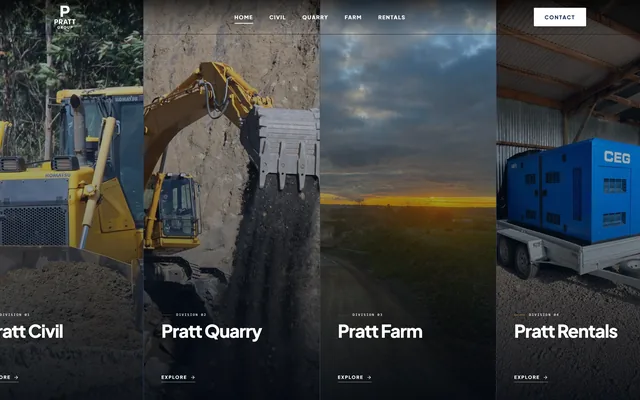
No. 10 · New Zealand · 2026
Two websites, built for the businesses to run themselves.
I designed and built websites for two New Zealand businesses, Pratt Group and The George Construction Solutions, and set each one up so its own people keep it up to date.
- Result
- Two client websites built and in their owners' hands. Pratt Group's staff update it themselves, and the business has paid for three rounds of additions since launch.
- My part
- All of it. The design, the build, the content system, the images, the launch and the guides I wrote for the people who run them.
- When
- The George, late 2025. Pratt Group built from January 2026, launched March 2026, equipment hire added August 2026.
- Built with
- Next.js, Sanity as the content system, Vercel.
01 / 07
A business with no website
Pratt Group is a family-owned company in the Manawatū with a civil works business, a quarry and a 420-hectare farm, and now equipment hire as well. It had no website. The most it had online was the quarry's Facebook page.
02 / 07
Four businesses that don't sell the same way
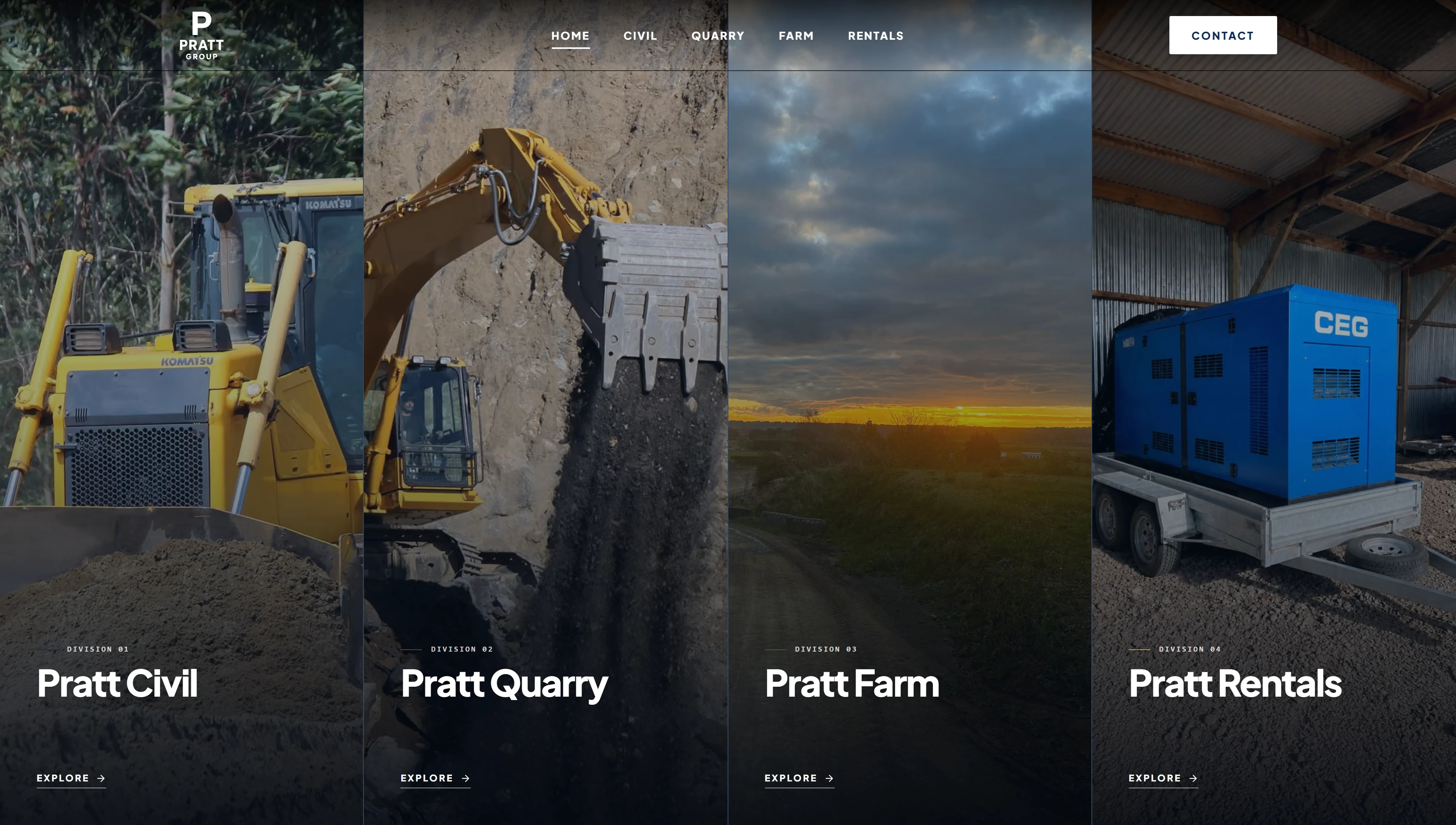
The first conversation about it made one thing clear: each part of Pratt deals with its customers differently, and the site had to respect that.
The farm isn't selling anything on a web page. It needed a profile. The quarry needed its products and prices where a customer could see them, with a phone number, because orders are taken by phone and they don't want people turning up unannounced. Civil is where the selling is: earthworks and development for farmers, where a job starts with a conversation. Hire, added later, is a handful of machines that someone rings up about.
So each part got a page built for what its customers come to do, written for the people Pratt actually works for: dairy farmers, beef farmers and people on lifestyle blocks.
03 / 07
A first version in a week
A week after that first conversation I had two different home page designs in front of them to choose between.
Pratt's own staff run it
One requirement was there from the start: the quarry's price list had to be easy to change when prices change. I built the whole site that way. Everything that changes, the people who work at Pratt change themselves: quarry products and prices, civil services, the machines for hire, the contact details. Nobody has to ring a developer.
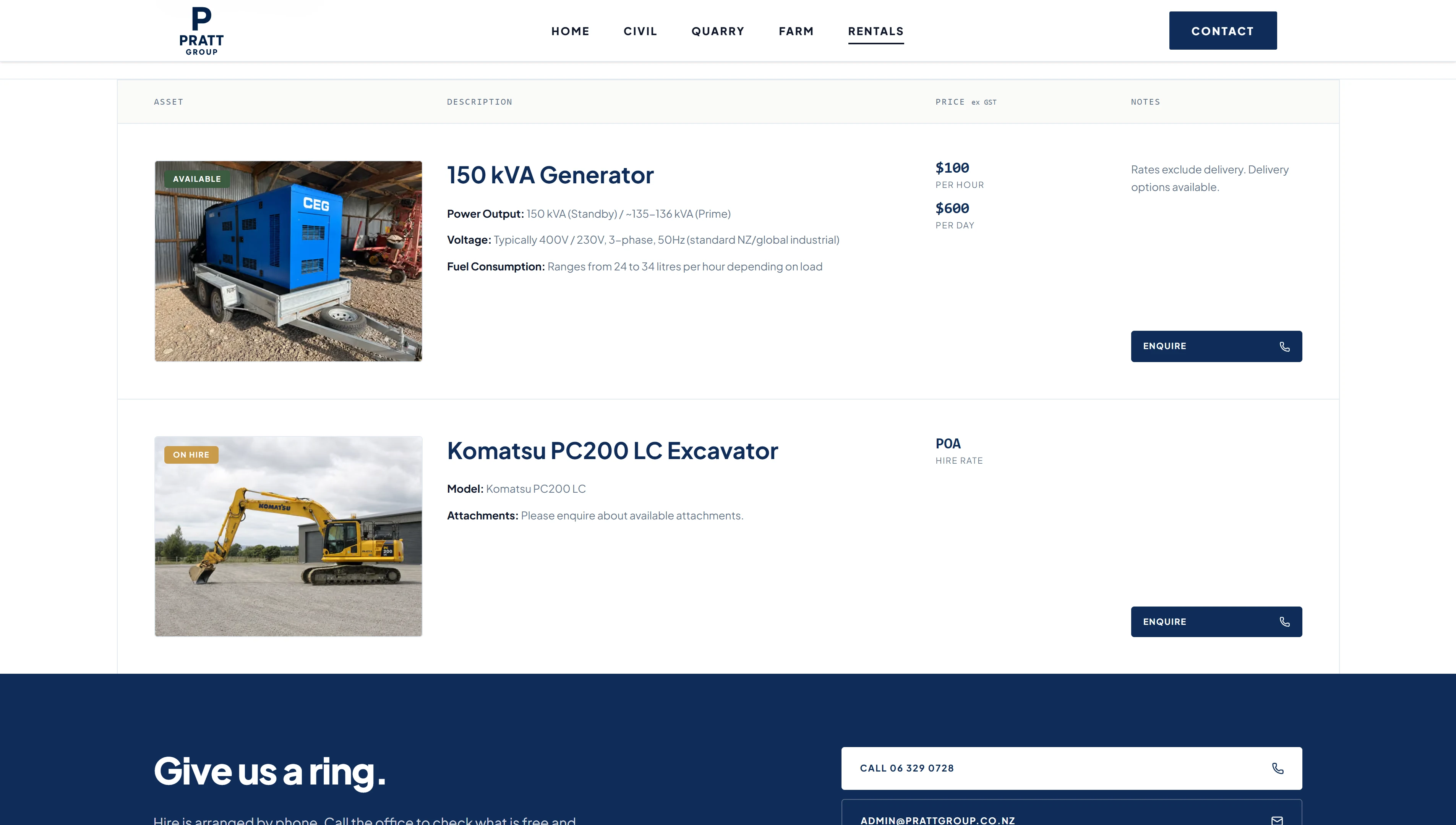
The hire catalogue shows why that takes design. A generator is described by its power output and how much fuel it burns. An excavator is described by its weight and its attachments. A form with fixed boxes would fit one machine and sit half empty on the next. So each machine has rows the editor adds as they need them, for specifications and for rates. They can mark a machine as available or out on hire, hide it, and drag the list into the order they want.
Hire is arranged over the phone, so that page ends on a phone number. There is no online checkout, because that isn't how this business takes a booking.
I wrote them a 15-page guide to all of it.
05 / 07
Real machines, shown properly
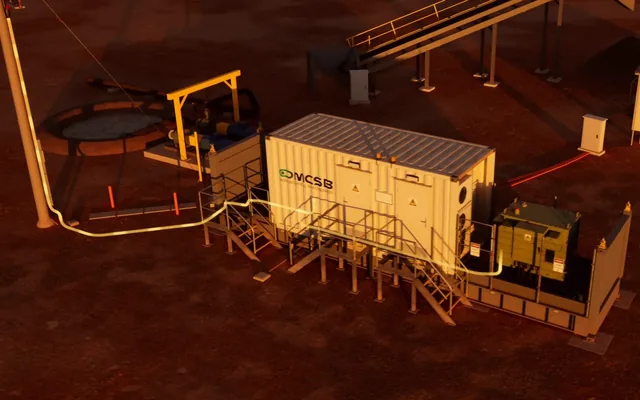
The hire page needed pictures of the actual machines, and all there was of the generator was one small image. I used AI to remake it at full size: the same unit, the same branding, shot the way a catalogue would shoot it.
I kept those pictures realistic on purpose. You don't want a glammed-up AI shot of a generator or a digger on a hire page. You want it to resemble reality, in the best possible version of it.
06 / 07
They keep coming back
The site launched in March 2026. Since then Pratt has come back three times: for the hire catalogue, for changes to how staff edit it, and for a new home page that gives all four parts of the business the same presence. Each addition has been paid work.
07 / 07
The George came first
The Pratt job came out of the one before it. In late 2025 I designed and built the website for The George Construction Solutions and handed it over with a guide so they could take it forward themselves. Its owner was impressed with the work, and when the same adviser brought me Pratt Group a few weeks later, the brief was to build it along the same lines.
Two businesses, two websites, and in both cases the people who work there are the ones who keep it current. That is what I build for: the business owning it, not depending on me.